
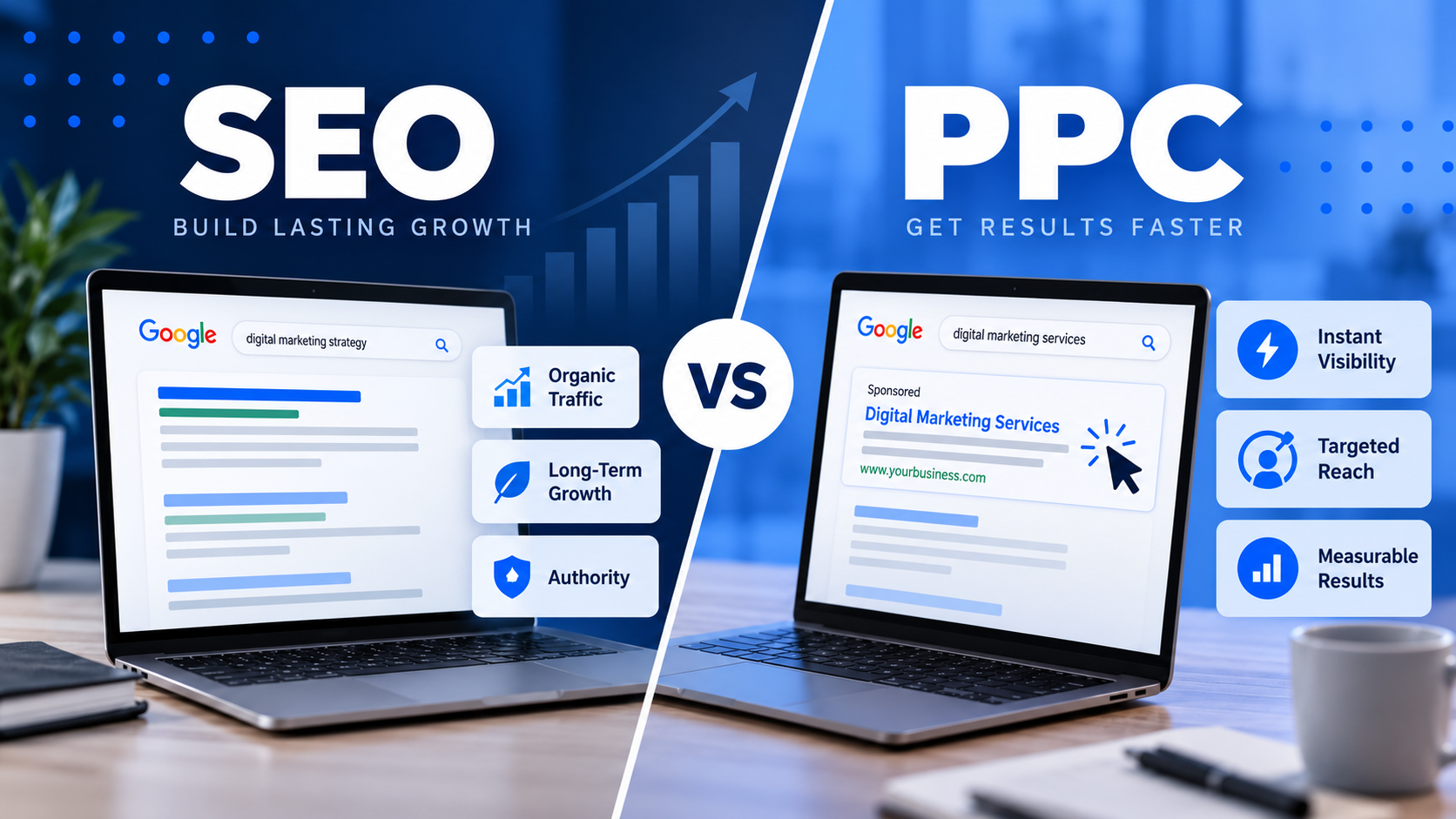
If you’ve ever looked at a page of Google results and wondered whether to earn your spot or pay for it, you’re already weighing SEO vs. PPC. Both put your business in front of people searching for what you offer. They just get you there on different timelines, with different costs, and with different strengths once you’ve arrived.
This guide compares the two side by side on speed, cost, sustainability, lead quality, scalability, and ROI. Then it walks through the situations where it makes sense to start with one channel and why most growing businesses end up using both.
What’s the Difference Between SEO and PPC?
SEO (search engine optimization) earns your website a place in Google’s organic results by making it more relevant and useful for the searches your customers run. On the other hand, PPC (pay-per-click) buys a place in the paid ad positions, usually through Google Ads, and you pay each time someone clicks. SEO is an investment that builds over time, while PPC is closer to a dial you can turn up or down whenever you need to.
The truth is, neither channel is better in every situation. The right choice depends on how quickly you need results, how competitive your market is, and how much room you have to invest now versus later.
SEO vs. PPC: A Side-by-Side Comparison
Here’s how the two channels stack up on the factors that matter most when you’re deciding where to put your marketing dollars.
| Factor | SEO | PPC |
|---|---|---|
| Speed | Builds gradually; Google has said improvements typically take four months to a year to pay off | Ads can start showing within a day or so of launch |
| Cost model | Ongoing investment in content, technical work, and links, with no charge per click | You pay for every click, so costs rise with traffic |
| Sustainability | Rankings and traffic tend to last and compound over time | Traffic continues for as long as the campaign is funded |
| Lead quality | Visitors are often researching and building trust before they reach out | You can target high-intent searches, specific areas, and set schedules |
| Scalability | Grows as you add content and earn authority | Scales quickly by raising budget on campaigns that work |
| ROI | Often improves over time as cost per lead falls | Easy to measure precisely from the first month |
Looking at the table, a pattern shows up. PPC is strongest in the short term, with speed, precision, and clear reporting. SEO is strongest over the long term, with lasting visibility and a cost per lead that tends to drop as your rankings grow.
When to Prioritize PPC First
PPC is usually the better starting point when you need leads soon and want to see exactly what you’re getting for your money. It’s a strong fit if you’re:
- Launching a new business, location, or service that doesn’t rank yet
- Promoting a seasonal offer or a time-sensitive event
- Competing in a market where page-one organic results are dominated by established names
- Testing which services and keywords bring in the most profitable customers
That last point is a bonus many businesses overlook. A few months of PPC data shows which searches actually turn into customers, which gives your SEO strategy a head start.
When to Prioritize SEO First
SEO deserves the first slot when you’re building for the long haul and can give it time to grow. It’s often the smarter lead investment if you’re:
- In an industry where clicks are expensive and lasting organic traffic adds up to big savings
- Serving customers who research carefully before choosing a provider
- Working with a site that has solid content but needs technical improvements to rank
- Planning steady growth over the next year or two rather than a quick burst
Starting with SEO doesn’t mean waiting quietly for results. Fixing site speed, tightening service pages, and publishing helpful content all start improving how search engines and visitors see your business right away, even before rankings fully catch up.
Why SEO and PPC Work Best Together
For most small businesses, the strongest answer to SEO or PPC is a mix of both. PPC brings in leads while SEO builds momentum, and as organic rankings grow, you can shift ad spend toward the competitive or seasonal searches where paid visibility helps most. Insights flow both ways too. Your best-converting ad keywords point SEO toward the right topics, and your top-performing organic pages show you which messages are worth putting into your ads.
A Simple Way to Phase In Both Channels
- Months one to three: launch focused PPC campaigns on your top services while you fix technical SEO issues and strengthen those service pages.
- Months four to six: use your ad data to guide new content and keep PPC running on the searches that bring in the best leads.
- Months six and beyond: as organic rankings grow, rebalance spend toward the searches and seasons where ads still add the most value.
Not Sure Whether SEO or PPC Is Right for Your Business? Let’s Find Out.
Investing in digital marketing shouldn’t feel like a guessing game. Whether you need qualified leads right away, want to improve your visibility on Google, or are looking to reduce your long-term customer acquisition costs, the right strategy starts with understanding where your marketing dollars will make the biggest impact.
At JMax Media Solutions, we help businesses make smarter marketing decisions by identifying the right opportunities for both paid advertising and organic search. From targeted PPC campaigns that reach customers ready to take action to SEO strategies that build lasting visibility, we focus on what matters most: attracting qualified leads and turning them into customers.
Before you spend another dollar on marketing, let’s make sure it’s going in the right direction.
Call 585-488-6510 or schedule a consultation with JMax Media Solutions. We’ll take a closer look at your current online visibility, your competition, and your business goals to help you determine whether SEO, PPC, or a combination of both is the smartest place to start.
FAQ Section
Does running Google Ads improve my organic rankings?
No. Google keeps its ad system and its organic rankings separate, so paying for ads won’t move your website up in the organic results. The two can still support each other indirectly, since ad data helps you choose better keywords and content for SEO.
Should I run ads on keywords I already rank for organically?
Often, yes, especially for your most valuable searches. Appearing in both the paid and organic results takes up more of the page and gives searchers two ways to reach you. It’s worth testing, though. If an organic listing already captures most of the clicks for a branded search, that ad budget may do more elsewhere.
How does local SEO fit into this decision?
For businesses that serve a specific area, local SEO is its own piece of the picture. A well-maintained Google Business Profile, consistent contact details across directories, and steady customer reviews help you show up in the map results. That’s free visibility that sits alongside both your organic listings and your ads.
How do AI Overviews in Google search affect SEO and PPC?
They give both channels new places to show up. Clear, well-organized content that directly answers common questions has a better chance of being cited in AI-generated summaries, and Google has also started showing ads in and around AI Overviews. Strong SEO fundamentals and well-targeted ads both help you stay visible as search results change.